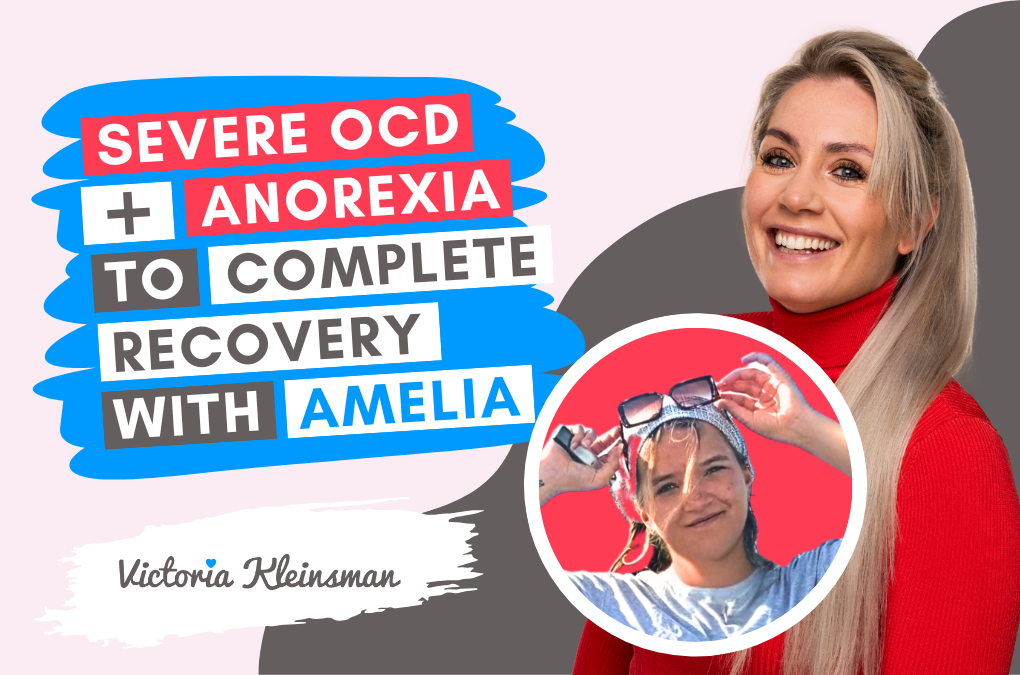
Severe OCD + Anorexia to complete recovery with Amelia
Body Love Binge Interview with Amelia – From 7 Years in Treatment to Complete Freedom
In this incredibly powerful interview, I sit down with Amelia, who recovered from anorexia, severe OCD, and suicidal ideation after spending 7 years in the UK mental health system. She shares the brutal reality of inpatient treatment, being misdiagnosed, having her autonomy stripped away, and ultimately recovering completely on her own terms. Now 20 years old, she’s travelling the world – something that would have been impossible in her eating disorder. This episode is essential for anyone stuck in the system, anyone told they’ll never recover, and anyone who needs proof that full recovery IS possible.
This episode will give you hope that no matter how stuck you are, no matter how long you’ve been ill, no matter what the system says – full recovery IS possible when YOU decide.
What I Cover in This Episode:
✨ Misdiagnosis and system failures – How being labelled with only anorexia meant Amelia’s severe OCD wasn’t treated, and how rigid meal plans fed her compulsions
✨ Inpatient treatment reality – Restraints, being surrounded by competitive illness, weight-based rewards/punishments, and why it doesn’t support actual recovery
✨ Separation from family – How the system tore Amelia from her mum for years, causing isolation that made everything worse
✨ Psychiatric units and being sectioned – The reality of being moved to adult psychiatric care, having phones confiscated, and being treated like a prisoner
✨ OCD rituals consuming her life – Hundreds of daily routines taking hours, controlling every movement, making it impossible to participate in life
✨ The turning point – Seeing an older woman with anorexia and deciding “that can’t be me,” then choosing to recover on her own terms
✨ Work as a lifeline – How having a job gave Amelia purpose beyond being a patient, helping her want to live
✨ Reconnecting with her mum – The emotional reunion after years apart, and how it showed her where she wanted to be
✨ Leaving treatment on her own terms – Threatening to section her again, going to hospital willingly to prove she didn’t need to be there, then moving into her first flat
✨ Stopping OCD rituals – Literally sitting on the floor mid-routine, singing songs to interrupt compulsions, exhaustion being the catalyst for change
✨ The decision to go all in – Making a video saying “I’m doing this,” throwing away old clothes, eating 10,000+ calories daily without counting
✨ Extreme hunger and body changes – The 34-week pregnant belly, sweating, swelling, and trusting the process whilst her body distributed weight
✨ Podcasts as lifeline – Listening to extreme hunger science episodes six times a day to believe the words and trust her body
✨ Coming off medication independently – Reducing antidepressants and antipsychotics herself (with mum’s guidance) after years on them
✨ Full recovery and freedom – Eating whatever she wants, forgetting to eat sometimes, having boobs and a bum for the first time, travelling the world
Powerful quotes from the episode
💬 “I was diagnosed with anorexia, but they blamed everything on the eating disorder. They were treating me with rigid rules and meal times that just fed straight into my OCD.”
💬 “I couldn’t see my family for years. My mum didn’t see me. The system tore us apart. I felt so alone.”
💬 “I had my treatment team deciding everything for me from age 12 to 19. What I ate, what I could do, whether I could work or go to school. I don’t like being told what to do.”
💬 “I looked at someone in their 60s with anorexia and went, ‘That really can’t be me.’ My determination led me to be like, if I’m not getting help from the people meant to help me, I’ll do it my own way.”
💬 “One day I looked at my eating disorder breakfast and went, ‘This is disgusting. I’m not doing this.’ I made a video saying from today onwards, I’m eating exactly what I want. I’ve never gone back.”
Links and resources
💙 Follow me on Instagram @victoriakleinsmanofficial
Transcript
Speaker 1 (00:01.43)
I wanted you to come on so you can share your incredibly powerful story with the world.
I mean, I don’t know whether it’s incredible, but yeah.
it absolutely is. just as a heads up to people watching, you’re in, in fact, you tell us what country you’re in, what you’re doing currently, because it’s very exciting. And then I’m going to dive into all the questions and leave the call for you.
So I’m actually currently in Beijing, China and I’ve been traveling for around seven months now and I’m continuing to travel and travel the world for the next two and half years is the plan.
And none of that would have been possible at all in the eating disorder of course.
Speaker 2 (00:56.032)
No, none of it would have been possible if I didn’t recover like from like any of them. Like I think, but like I think also traveling has aided it massively for me, but not in like the recovery aspect, but in the recovery of like finding who I am. If I may say.
Yeah. Oh, it does. So let’s dive straight in then. So when did the eating disorder start for you and how old were you? And then feel free. And if I want to interrupt you, just like wave my hand so you know that I’m going to be asking you a question. just share your story from when you were diagnosed, tell us all the fuck ups that you’ve had with the system and all that stuff. And I like to say, if I have a question, I’ll just make a noise or a move so you can see.
Yeah. So I got diagnosed when I was like 12 years old, but I like showed symptoms of it and like my struggles from like the age of eight. But I’m quite a secretive person. So all of my struggles and problems, I don’t really have to call them problems, but I’ll just say problems for now, were very like hidden and I kind of concealed them from everyone else. They didn’t know.
until it became quite obvious when I was 12 and then I was diagnosed with anorexia, which is one of the fuck ups of the services because like I was misdiagnosed, like it’s not that I was misdiagnosed. I did have anorexia, but when you’re diagnosed with anorexia in the UK with like the mental health system, you can’t be diagnosed with anything else unless like
It’s unless you’ve recovered from your eating disorder. Well, that was my experience. I couldn’t be diagnosed with like, for example, OCD or anything else other than anorexia because anorexia kind of was like a, I don’t know what the word is, but yeah, anorexia was kind of like a link to everything. And they just blamed everything on the anorexia. And I like did home treatment. you waving at me.
Speaker 2 (03:17.088)
No.
I think it’s really worth sharing your experience with your other diagnosed mental health conditions because it’s not only the anorexia, it wasn’t because it’s not now, wasn’t only the anorexia for you. So can you share what other stuff you struggled with and why that label of anorexia then blaming everything on anorexia wasn’t actually serving you well?
So I used to struggle with OCD massively and for me it was really difficult to be believed in anything that I said because everything that I did was blamed on the eating disorder and I would be like no that’s not my eating disorder which you know looking at it now you know like services and like professionals can’t really
They can’t trust what you’re saying, whether it is the eating disorder or not, but they really should because I knew in me that it wasn’t. And looking back now, I knew it wasn’t. And I knew it was something else other than an eating disorder. But then yet they were treating me with a treatment that was also feeding my OCD. Like you have rigid rules, rigid meal times, amounts of food you have to have.
ramp and like that just fed straight into my OCD and they were like why don’t you do this every single day and I was like I don’t really want to be doing something every single day and then they were like well they can’t do that.
Speaker 2 (05:03.854)
My phone is saying it’s running out of storage. I need to try and figure this out. How do I do that?
Just keep going and if it goes tits up, I can still get the original recording from my end, so it just won’t be as good quality. So it’s fine.
Okay. So, yeah, they were treating me with what was basically feeding my other issues. then because I was never listened to and I wasn’t getting the help I actually needed because they were giving me the wrong treatment that I personally needed, then that led me to start doing coping in other ways that weren’t just my eating disorder and OCD.
I honestly was like, my brain was just so full of everything that I didn’t want to live anymore. And I spent a lot of my time trying to leave the world.
Yeah, well that’s heavy because, and thank you for going there and sharing, lots of people resonate. So if you could go back in that treatment centre, how would it have been better for you to support you in recovering from anorexia without, like you said,
Speaker 1 (06:24.522)
amplifying the OCD because of all these rules and you can’t actually eat when you’re hungry unless it’s on the meal plan which is ridiculous and it has to be
I think it really depends because like obviously in some cases when you start off eating sort of recovery you don’t want to eat at all so having a meal plan can help you almost have that structure but once you do it for a certain period of time it actually isn’t like it isn’t what you need or it wasn’t what I needed because it was just it just fed into like
the cycle of going from my eating disorder to my OCD and then that leading back to my eating disorder and it just like kept feeding it and I don’t know, I think because the first inpatient I went into it was eating disorders like specialist unit, they hadn’t obviously no idea that I was struggling with OCD because I wasn’t diagnosed with it yet. So I was like treated as if I was an absolute crazy person.
because I would be doing my routine or my ritual that I used to do. And a staff member would interrupt and be like, what are you doing? And then they would get annoyed and start swearing and shouting at me because I wouldn’t stop. And I then would be like, well, look, can you just let me finish this? Otherwise, I will not be able to go to sleep. Because one of my routines, for example, I don’t want to say it because I don’t want to then trigger someone to then
do that as a routine. But for me, I did something before I went to bed and I couldn’t get into bed without doing it. And basically the staff members would always be like, why are you doing that? And like, they would then threaten me with things if I didn’t stop doing it, then they thought would like, I don’t know, that it’d be like, if you keep doing it, we’re going to have to increase your meal. Which for me, I was like, no, can you just like, let me get this done? Because it was like,
Speaker 2 (08:28.558)
sudden like what a routine that was meant to take like no longer than five minutes ended up taking like hours like three four hours because I just kept getting interrupted. It’s like redoing it. So I think if I could change anything it probably would be more understanding on like the comorbid disorders like not just having one disorder because when I was seen as just one eating disorder.
when actually I had a lot of home abilities within that, if I may say.
Definitely. And what is like causing me to feel angry right now when you’re sharing your story is that they use food as a weapon to try and stop you from doing the OCD behavior. So what if I heard you say correctly, they said if you don’t stop doing your behavior, we’ll increase your meal plan. Whereas you’re supposed to have been in there to make peace with food and recover from anorexia. And so I know in the latter part of this chat, we’re going to go into how you actually
covered because from what you’ve shared and personally off this podcast as well, your retreatment was a shit show and you didn’t recover at all and you only recovered when you got out. But I want to stay in the shit show and the clusterfuck of everything for now, if that’s okay. And feel free to share as much or as little or as not at all as much as you like about this. Like you shared with me before that stuff happened in treatment that should never have happened.
to someone who was supposed to be taking care of you. So you can skim over that or you can share a bit or not at all. again, sadly, this is not the first time I’ve heard this happening in treatment centers.
Speaker 2 (10:15.47)
to go into detail about it because I just don’t really want to put that on a public platform in the sense that you know I don’t think it’s quite personal but I think that the system is like especially the mental health system in my opinion is really fucked up because how do they expect someone to recover from eating disorder which is a competitive illness surrounded by a bunch of other girls with
the same competitive illness and you’re living together 24/7 you sit at a meal together, you stare at each other while you’re eating, you stare at people who are not eating, you watch them get dragged into the treatment room for treatment and it’s like, how is that a good place for someone to be to recover? And they don’t give a shit about your actual mental health. In my experience.
All they gave a shit about was if you gained weight or if didn’t. And if you gained weight and you got rewarded with an outing, to be able to go out. And if you didn’t, you’d then get punished by not being able to go out or have an offsite with your family or like, you know, and it’s like, for me, my experience with services in terms of family, it tore me away from my family. It completely…
separated them from my family, which was the hardest thing for me. Like I didn’t see my family for years. Didn’t talk to them. I blocked them on everything because the hospital kind of, they drew us apart in ways I don’t want to go into, but like I couldn’t see my mom. My mom didn’t see me. didn’t like, and it was just like, my mom was told one thing, I was told another and you know.
I saw my mum for the first time last November in years and it was like, when I think what that of drove me to feel was I felt so alone. kind of, when you’re eating disorder and your other mental health issues make you feel alone anyway, like that just made me feel even more alone because I was completely taken out of my whole family and.
Speaker 2 (12:34.892)
You know, I was isolated, but like, I spent years of my life isolating myself, but then the system to then do that to me, it was shit.
and traumatising, I’m sure.
Yeah, I mean a lot of insurgency in those places and throughout my whole like inpatient community team everything I mean they really fucked you up.
Yeah. Wasn’t you also, because I think it’s worth speaking to if you’re comfortable with this, because it is common, not really common, but it’s definitely, I’ve seen it in a couple of my clients, that people have been, and you have been experienced having put on a psychotic ward and been given psychotic medication and then like chained down and all that kind of stuff.
Well, being chained down and like, well, the correct one is like restraint. can happen on an EDU. So like on an EDU, if someone is refusing treatment, which in their eyes is food, they then have a second option of replacement drink. And if they don’t drink that within like the timeframe that you’re given, you then get it through an energy. But it’s all like figured out apparently by your…
Speaker 2 (13:50.862)
psychiatrist and you’re like MDT team and they like they sort it all out but basically if someone doesn’t want to go into the treatment room for their treatment then you will get restrained in there and you’re like it would be like you would all be like sitting in the lounge chilling after a meal and then all of a sudden you see a group of them staff come in with blue gloves on and they’d be like can everyone move the room, bar.
the patient’s initials. then, you know, and this was like three times a day because it would happen breakfast after breakfast, after lunch, after dinner. And we would all be sat in the lounge and we would all have to vacate the lounge. We’d be sat in a different room and all you hear is banging, clattering, tables falling down, chairs falling down, stuff struggling, telling the patient to just get up and go to the thing. And then you hear screaming from the patient because they don’t want to go into the treatment room.
depending on how many patients are on the ward, like that would be 10 patients within an hour. would be, and then that would then lead to other patients having it. It’s just a very, I mean, that happens in the EDU, personally for me, I was in an EDU and due to certain things that happened when I was in the EDU, it unlocked a lot of things for me in terms of like my past traumas. So then,
I then got severely worse with my suicidal ideations and also hurting myself. So then I was transferred to a pick you even further away from where my family lived. And my mum wasn’t really kept in the loop of that whole thing either. So I think it was only after a few weeks that she found out I had moved there.
I was moved to a psychiatric care unit where I was on a ward with like psychosis patients struggling to psychosis patients. People who like, it was actually very, very scary for someone who would just like who originally went in for an each order. And then a year and a half later ends up going to a pick you and you’re like, what the fuck is going on? And the way they treat you in there, it’s more like a prison than it is actually.
Speaker 2 (16:19.544)
treatment. They don’t help you. They don’t. You’re just kind of left to walk around the ward for 24 hours a day, kind of like, what the fuck am I meant to do with myself? Like, you know, they don’t offer therapy. don’t offer, like, you see a doctor once a week and you’re like, well, can I have a pen back? Can I have this back? And it’s like, I just think there’s, there’s got to be a, but I know they said it was for like safety, but like,
How can not letting someone go out of the pressure or even like, you know.
Like how is that meant to help someone get better? And for me personally, it didn’t. Like keeping me inside and locked away and in the dark, like how was that helping me get better? Like they would take your phone away if you didn’t do anything or like they delete things off your phone if they saw something that was against the hospital. So like they can then keep hiding the things that are going on in the hospital that they don’t want people to know about.
they would conduct like phones. It’s just like, it’s just so fucked up. I don’t really get how a lot of them are still running. really like, when I go, if I were to go into everything that went wrong in those hospitals, my God, I could be in for hours because it’s just a shit show. Like, and I’m not saying that like all the staff in all the hospitals I went to were bad, but the majority of them were. There was a very,
was like a very small minority of people who made your time on those wards a better place to be and I actually am still forever grateful to those people because they got me through it more than I would have done if I was just on my own.
Speaker 1 (18:11.47)
How long did you stay in an inpatient facility depending on where you got transferred ultimately? was the length of time you were in there for? And then how did you get out? And last question, so three here, how long were you in there for? How did you get out? And did any of the treatment help you?
I think momentarily it helped me but that was only because I was kind of in the trance of the hospital like I think when I think about the treatment they gave you it was more of like a threat if you don’t do this you can’t do this or if you don’t do that you’re going to do this so in the time I thought it was helping me because then
I was able to do things that I wanted to do, for example, like I could get a pen back or I could, you know, have a hoodie that I wouldn’t sit back. Like, so in the time I thought it was helping me, but looking back now, I’m like, that was actually doing absolutely fuck all. But in total, like the time I spent in kind of inpatient and kind of a step down unit, it was…
My memory is off. This is like me trying to figure out how long I was in it.
Speaker 2 (19:32.814)
It was like, it was three and a bit years, I think. Like, in total, it would have been that. Three and a bit years. Something like that. But, like, that’s a long time to not be living at your home. And especially, like, from the ages I was at. It was from the ages of 15, 16 to 19. So, like…
That was really hard for me because you’re not, like you’re taken away from like, I couldn’t go to college and I then missed my chance of going to university because I was unwell to do so. like, it does, like, I do like, if I think back to it, I’m like, I really shouldn’t have done that. Like, I really regret, you know, spending that long there. But I didn’t really.
I can’t see, if I look back at it I have to only have like compassion for myself because I couldn’t have done anything different than what I was doing. Like, if that makes sense.
Absolutely. Don’t leave. Like at what point was you like, could you choose to just leave? Like how did that come about? And then how did you find me? Because I know you listened, if I remember correctly, you listened to my podcast a lot before you then reached the end the video.
And how did you?
Speaker 2 (20:59.4)
Yes, so I was actually sectioned for the first two places I was in. And you can’t just leave. If you leave, then you’re brought back by police or you’re brought back by hospital staff. So when you’re sectioned, you can’t leave. But I then moved to a set down unit and I wasn’t sectioned anymore.
it was more like I chose to be there because I couldn’t go home because I hadn’t seen my family for so long. And I was still like under 18. So I didn’t really, I was about to turn 18. It was like a week off turning 18. So it was kind of my, was either like, for me, I was given the option of you either go to an adult inpatient unit or you go to a step down unit. And I knew which one I wanted to do. So I then went to the step down unit, which
In my personal opinion, it’s probably worse than an inpatient in terms of like recovering mentally because the concept of it is right. It should work like you go to a step down unit, which is a pathway home. Like you go there between inpatient and then going home or like living on your own, whatever you choose to do. And it helps you to, you know, return to the community, be safe and do this and do that. But
the execution of it was not that. Again, you put people who struggle with very competitive mental illnesses all together in a house. Even that kind of messes with your brain a bit because you’re like, I’m in a home now, I’m not in hospital. But then yet things that would happen in the hospital experience would happen there. And you’re like, I thought I was coming here to get away from it.
because of accidents and alarms and noises in hospital that still haunt me to this day, what happened in that house, and you’re there like, you know, I really don’t need this. I’m trying to get better. it was still like, it was still the same system, if that makes sense. Like it was still the same. You have a meeting every week, you had a whole team deciding your next move or what you would do or this and that. And you’re like, the whole like,
Speaker 1 (22:59.116)
the imps
Speaker 2 (23:27.374)
Like, I think when you spend, so like, obviously I had a treatment team deciding what I was gonna do, what I could do, I couldn’t do, what I was eating, what I wasn’t gonna eat, what I was allowed to do, whether I was allowed to work, whether I was allowed to go to school, I was allowed to do this, whether I was allowed to do that. Like, I had my treatment team deciding everything for me since I was 12 and until I was 19. Like, and I think when I got,
to the set-up unit. Because I had been let down by services so many times, I don’t think I could actually trust the word they said or listen to them or take anything with what they said on board because I was so let down in the past that whatever they said, I was like, yeah, okay, right, yeah, okay. I think, you know, maybe if I haven’t had the experience that I’ve had in the past, then it might have worked, it might have done something for me.
but for me personally it didn’t and it just didn’t work for me. None of it worked for me because to be quite honest, I am quite stubborn and I am also a very determined person and I don’t like doing what people tell me to do. So I can kind of see why from 12 to 19 having a group of people tell me what I can and can’t do didn’t work for me.
Oh my god, it’s so common. I still to this day hate being told what to do. Like, I don’t do the opposite on purpose anymore like I used to just because I can. But with that rebellious part in me, I think, I really think this is linked to my autonomy that was taken away from me in an erection recovery because I was threatened and forced to eat. And although in a way it did save my life.
It was like I had no choice and no dissipation in my life whatsoever. So there was so much anger and greed within me. So what happened when you were in that place? We used to be like, stop this, I’m going to do it by myself. Like what happened then? Then tell us about how your real recovery actually looked like because it needed to come from you to decide to recover, right? Then what did you actually do from that point?
Speaker 2 (25:23.214)
When you
Speaker 2 (25:41.976)
So it kind of started like, so when I first went there, I was allegedly in eating disorder recovery, but I wasn’t. was still doing a lot of behaviors that I really shouldn’t be doing. And I was just declining. Like, you know, when you’re an inpatient unit, you just have to eat or you have to do what they say. Otherwise you are going to get it either way anyway. But this place was very different. So there was a lot of room for
wiggle room and the eating disorder to get in, which then also exacerbated my other mental health issues and constantly being around like reminders of hospital experiences and also my other traumas then made everything else a whole lot worse. So for a good year and a half, I lived the same day every single day because of my MCD.
Like I got up at the same time, I did everything at the same time, I did the same routine, I then my teacher did this and that. I went up and down the stairs at the same time every single day at the same pace, at the same, I rocked and forth with my feet. did this around my room, I then tapped this and then I would go on my daily walk, which I then walk around the town I was in and tap a sign at a certain time. I would, you know, listen to the same playlist and it would be at the exact same time that I tap that sign or like, you know, I’d have a conversation with someone.
and if no one was there to have a conversation with I’d have it to no one. Like it was such a draining life and it wasn’t just like one routine a day it was hundreds of routines in a day that like from you know a tiny one second routine to a routine that would take two hours like and it was when I kind of like I got to a point and I was like what the fuck am I actually doing and I was like
you know, I wasn’t, this has been, obviously I’ve been with services for so long, went, I don’t want to be like this. I think I remember, I think I was like in the town I was in and I met someone or I saw someone and they were like, I think they were like in their 60s and they had an arrest. And I looked at them and I went, my God. I don’t think, I was like,
Speaker 2 (28:02.574)
that really can’t be me. And I had so many people in my life tell me, like, you’re not going to do it. You’re just going to say, it’s for us to be like, you’re going to live like this forever. went, am I actually going to be like that? And I was like, I don’t want to be like that. So then my determination kind of led me to then be like, OK, if I’m not going to get the help from the people that allegedly meant to help me, I’m going to have to do it my own way. And I realized I can’t recover from anything that I had.
unless I wanted to live first. And I really couldn’t live. I was attempting multiple times in a week and it was just awful. And that was kind of also driven into my OCD. Like my OCD routine was to try and kill myself every single, like it’s so fucked up. Like I then was like, right, okay, I need to figure out how I want to live. And I worked on that first. then obviously it wasn’t as easy as just like clicking my fingers and like.
to live again. I had to do personal work into doing, like I read books, I like really spent time writing things down and like I wrote New Dick which helped me and I found ways of like why I was live and I started like I was allowed to to work so actually when I was working that made me realize actually I’m so much more than just a patient in a unit or a hospital or a step down unit and working and the people I worked with.
was such a key aspect to me actually wanting to live because I would get up and I would not do my OCs and routines in order to go to work because I felt like I had a purpose other than just being ill. And then to kind of cut a long story short, I went, I had to like work on it in school, so I had to want to live and then I had to stop self-harming and then I had to kind of work on my OCD and then I had to work on…
like bearing in mind OCD and E just sort of kind of came like I worked on both of them at the same time and they kind of fizzled out at the same time if that makes sense but I worked on like my OCD routine like heavy routine first because that was taking a lot of time and a lot of brain space because it was all day every day so I worked on like slowly reducing those down and then when I got to that point I went
Speaker 2 (30:29.934)
I’m really lonely. So I then reached out to my mom and I said, can we meet? And we met for the first time and I met my sister-in-law too. it was honestly like, I think I remember crying before and I cried after because for me personally, it felt like no time had gone. But at same time, it felt like.
I’d missed so much and seeing them was like, I kind of knew where I wanted to be and I didn’t want to be where I was anymore. So I then skipped a few months and I then had Christmas at home for the first time, which I’d worked. Like I was given like a long list of things I had to get done and had to improve on by like the team that I was working with.
in order to go home at Christmas, which I did. And I think when I got back from being at home for Christmas, I think I was at home for like four or five days. I got back and I went, I don’t want to be here. I’d like not, no, I didn’t want to be in the house anymore. I didn’t want to be in the step down unit. I was like, this is an actual load of bullshit. I don’t want to be here. I want to be with my family at home. So then I then was like,
Right, I want to leave. And this was in January this year. And I was like, I want to leave. I don’t want to, I don’t want to be here anymore. I want to go home. And obviously I spoke to my mum and I was like, I want to come home too. And my team were like, well, you’re not well enough to go home. can’t go home. So then they were going to try and section me again. And I was like, well, you can’t actually section me because at this point I was like, I had done a lot of psychology on myself and like work to understand.
what behaviors and what, which part of my brain is causing this thought and that thought. And I had done a lot of work to understand me. So if they had tried to section me, then I wouldn’t have been able to be sectioned because I had such an awareness of my struggles and my behaviors. For me, because of the OCD, my behaviors and struggles almost became habitual because I had done them for so long, and struggled with it for so long. They were just kind of second nature to me and I didn’t know how to live any other way.
Speaker 2 (32:54.232)
So like, I didn’t know how to live without any, I didn’t know how to live without OCD. So I just kind of did them naturally because that’s all I’ve learned to do. And I then was like, I want to leave. And then they said, well, you’re going to be sectioned. And I said, look, you want me to go into hospital? I’ll just go in willingly, which they weren’t expecting, to be honest. They were like,
you’re not going to go in willingly. So we’re going to have a section where I look, if I have to go into a hospital, like, inpatient again, for you to let me leave this place so that I can be nearer, bear in mind, the place I was staying in was four hours away from my mum. So the hospital that they were going to let me go to, which was like a, it was another eating store, especially like inpatient union, was like a half an hour drive away from my mum.
so I would be able to see her more often. And I went there and I remember going to the hospital and like on the first few days they were like, you don’t need to be here. Like you’re not, like there’s a difference between like CAMHS inpatient units and adults. And I feel like, I mean, I don’t really have to explain the difference, but they were like, you’re so aware that you’re in the world that you don’t need to in. And I was there like, well, I did try and say this, but.
that didn’t listen. So I was only in there for like, I think it was like literally like a week and a bit, like nearly two weeks I was in there. And then me and my like, and then I basically moved in. I bought my first flat, but I rented it. And I went into my first flat and I was like a half an hour drive away from my mum. So it was kind of, it’s all a bit overwhelming. Like I know this sounds like really fast moving, but like.
I went from being in the step down units, then going to hospital, to then only being there for two weeks, then going into my first flat and living on my own. Like it was such a whirlwind, but like it was like, I think it was like an instinct I had. Like I had this feeling in me that it was the right thing to do. So I just did it.
Speaker 1 (35:06.19)
That speaks volumes because what I’m hearing you say as you share your story is you almost the people saying you’ll never recover you’ll always be like this triggers something within you to be like fuck this especially when you saw not coincidentally that woman who looked very anorexic with in an older an older woman something within you was like fuck this like you know I want different from that
determination of that decision, everything then changed from that point. From that point, did you then freely and unrestrictedly? And then another question, how did you stop the OCD rituals and rules? Because that’s something that’s hard to describe, because I know you just stop it, you just gradually stop it. Well, then all the fear and resistance you were met with when you didn’t do the thing you’ve always done.
Thank
Speaker 1 (36:02.126)
Can you talk about those couple of things?
Yes, so in terms of OCD and stopping that, was more of the fact of like, a few of the routines were more like I had to literally just like, what I would do is I would go to do my routine and I would literally just like slam my bum on the floor. I would just sit down cross-legged until that thought would go, and it sounds like if anyone saw me do that, then they must have.
thought I was like a weirdo because like, literally if I went to go like walk around my room and like tap a corner and then do this, I would literally just stop right out and sit on the floor. And then I would like, you know, I think I would literally just like sing a song or whatever to try and get rid of that fear of, you know, if I don’t do this and something bad is going to happen and you don’t know what that something bad is. And don’t get me wrong, like, you know, I did that for a few times.
But then there were few things that like, I didn’t even have to try to stop, they just stopped. Because I had done other things, it was like, you know, I just didn’t feel the need to do it anymore. I don’t know, like for example, like getting into bed, I think for like, from the age of eight, I don’t think I actually ever got into bed without doing something to make myself feel safe. And I remember one night,
I went to go do it and I went, what the fuck am I doing? Just get into bed, I’m tired. And I just got into bed and the next morning I woke up and I went, I didn’t do that. And I just got into bed and then like, it was just like, and this, this like started like mid last year where I started like working on my OCD and it was just very like gradual from that. like over time, the routines just got less and less and less because
Speaker 2 (37:59.278)
the more like if you just focus on one routine at a time that’s one less routine to then work on and then because with OCD personally I found that a lot of my routines were very very similar like it was either the same count or the same like it’s gonna sound so stupid when I say it but like the same dun dun dun like so if I worked on one of those it actually also helps like about five other routines because they were all so similar.
in the sense of like counting. So I was like, actually, I don’t need to do this.
And then what was the other question I completely forgot?
Well, before I ask you that again, would you say that you were able to just stop those gradually with what you’ve explained because you were perhaps somehow building safety within yourself and kind of trusting yourself more so it enabled you to feel safe within yourself. So therefore the external created safety that you thought you were doing when you were doing these things, it was easy to then stop them, if that makes sense.
No, it had nothing to do with me feeling safe at all. I felt so unsafe at the moment and you know, I felt unsafe the whole time I was doing it. Like I just stopped it because it was such, I got to the point where I’d it for so long that I was so drained. Like I was tired, it’s meant to be tired. I looked tired. I was just exhausted that I couldn’t do anything.
Speaker 2 (39:33.12)
I couldn’t even join an activity that other people were doing because it would interfere with my routine. And it was things like that that I was like, or like, think, because I have to, I also stopped my OCD. I started stopping my OCD before I met my mum in November. But if I was still stuck in that OCD, I wouldn’t have been able to see my mum because I would have been like, well, it won’t fit in my timeframe, like we can’t do this.
I felt so unsafe the whole time I was doing it, but I still did it anyway because I was tired and I was sick of it. And, you know, I think like, there wasn’t just like one day where I was like, fuck it, I’m gonna get better. Or like, I want to get better. I think from the day I started struggling to the day I actually like fully decided to just get better, there was always that part of me in my head saying, I wanna get better.
I, you know, why don’t I just f**k it and do it? Why don’t I just do it? But then you always have, like, but then that part just got bigger and bigger. But like, for me to then make the final decision to do it. But like, it was always there. But the negative part of my brain was always louder and always had more reasons for me to stay stuck where I was.
Oh yeah, definitely. And it sounds like you were living the costs.
of how you were living, the costs were so clear and so draining and so exhausting, which is actually kind of what started my recovery. I was just done with it. Like I was just like, fuck this. I can’t do this anymore. Like I’m just done. I feel unsafe anyway. So I may as well try and recover and then at least do something towards what I say I want and still feel unsafe. At least it’s better than just doing the same thing over and over again. So when did you then eat all restrictedly? Because when you came to me for coaching,
Speaker 1 (41:28.656)
I was almost like, you kind of don’t need me, really, but I’m still going to… Yeah, tell us about the unrestricted eating.
Yeah, so.
Speaker 2 (41:42.552)
So I remember I moved into my flat, I think it was like February this year. And for a good month, I stayed stuck. was like, I wasn’t recovering, but I also wasn’t getting like, I wasn’t relapsing, but I wasn’t getting better. So like, I was just kind of sticking to the same like thing I was doing. Like, you know, I was just, and I was allegedly with community teams in the community, but I never saw them once.
I had no communication with them. So that was out the window. And then one day I randomly got a letter saying, like, this is after like a month of living on my own and allegedly mentally seeing communities team. I got a letter saying, hi, Amelia, we just want to let you know that you’ve been discharged from the community services. Good luck to you and bloody bloody brother. And I was like, right, great. Okay. So I’m now completely on my own and
Like I was like, what the fuck? So like, I obviously wasn’t getting better. I was still kind of stuck in the same cycle of like, I was eating the same foods every single day. Like, but that wasn’t from OCD. That was more from eating disorder security kind of. And then I was like, OCD was sneaking back in because I was, it’s the first time I’ve lived in a complete room on my own for ever. So.
I was like, you know, things were starting to creep in and it was, started, I went back to work and got a new job and I was working in that job. And I remember like, again, I think this is going to sound like so weird, but work has definitely saved me more than I was like, more than I think, because I was really lucky with the people that I worked with, that they were so lovely and kind and
literally like a family to me that, you know, they like they would be like, do you want to and do this or that? And I normally would have said, No, I’m fine. I’m going to go back and do whatever I was planning. But then I was like, why the fuck I want to go. So I started saying yes, things or like, you know, my mom wanted to me, I’d be like, yes, that’s me. Or I think having that but also having like
Speaker 2 (44:07.82)
the security of knowing that my mum’s at half an hour away and I was closer to my family. I felt like I could do it. And every day like my… When I was living in a flat on my own after services left me, like, you’re done, know, like, see you later, you’re no longer with us. I was like, what the fuck am I meant to do? So then I started looking into help elsewhere.
And I started listening to podcasts and I listened to yours. And I also listened to Inside Anna’s Mind, which both of them were so helpful to me at the time. And I then went onto your page and saw that you did coaching. And I don’t know when exactly I reached out to you, but I reached out and I was like, look, I think I need help with this. I was like,
Because I reached out to you probably, I think, like two weeks before I decided to fully come in. I reached out to you, like, and you replied quite quickly. And I remember you messaging and I messaged and I think I was like, look, I’m really stuck. I’m like, I don’t know whether I should like just fully go for it, fucking just eat what I want when I want. Or do I like do it staged and planned? And like, I think like, and then I think like a week and a half in I’ve like,
we all decided and everything was agreed. And I think, like I said, the money over it was all sorted. And then like the week later, I think we had like scheduled our call for like two to three weeks time or something. And I was like, fuck it, I’m going to do it. Why not? Cause like, obviously we had messaged on Instagram and like you had like said some things. was like, do you know what, why didn’t I just do it? Like, so I did it and
I wouldn’t change up the world. Like that decision, I remember, I think it was one day, it was like a day off from work. And I got up and I remember I went to go make the same breakfast that I’d had. And I went, I think I looked at it and I went, that makes me feel sick. Like, I think I looked at it and went, why the fuck am I eating this? Because it was like one of my eating disorder concoctions that like actually like right now I feel sick.
Speaker 2 (46:29.932)
thinking about it. Because it was like the low calorie healthy breakfast, it’s meant to taste like this or whatever. It tastes like absolute shit. And you’re eating it and you’re like, I think I went to go put it on a plate and I went, this is disgusting. I’m not doing this. So then I remember I literally picked up my camera, like my phone, and I made a video and I went, you know what, from like today onwards, I’m going to do and eat exactly what I want whenever I was and I’m going to do it.
I’m just gonna go for it. And I still got that video on my phone and I look like a scared little like, but there was something in my eyes that was like, I’m doing this. I’m gonna do it. And from that day on, I listened to my body exactly what my brain and body wanted and I have never gone back. If that makes sense.
Yes. Yes, I mean, wow, that just shows the power of your decision. And also I’m hoping people listening to this who are trying, I’ll say trying quotes, because trying to do something and failing over and over again, you just live in learned helplessness. But I say over and over again, when you truly, truly decide,
to do something, there is nothing that’s going to stop you. It’s just deciding from that free will, that undetermination that you have. And so I remember, do you remember messaging you on Instagram actually? And I remember you saying, shall I do it like stage? And I just remember being like, eat whatever the fuck you want, whenever you want, however much you want. And I’ve got you. And then when we had our first call, I remember talking about M &S cookies. So can you share? Oh, I don’t. I miss that.
so much because I’ve been traveling for so long I haven’t been able to have them and it’s actually like it’s really the saddest thing you know.
Speaker 1 (48:23.308)
Yeah, can you share the context of how your extreme hunger was? mean, feel free. I think it’s helpful to add guesstimated calorie amounts in extreme hunger because people think, my God, I’m eating way too much than when someone else is like, no, I’m eating like 10,000 in a night. It kind of is like, okay, like I’m doing it right. And then in comparison to how your relationship with food is now, like what was the difference between extreme hunger all in to where you are now?
I remember the first day I was like, right, I’m gonna go, it was my food shop day anyway. So I went into my food shop and I remember being like, you know what, I’m gonna see something, I’m gonna pick it up and I’m gonna get it. So I did that. And I remember like, you know, the first few days, I think I was still getting in the swing of it. So I was kind of sticking to a breakfast and lunch and a dinner. And I was like, yeah, no, that’s fine, you know? And then about a weekend, I went, I’m so hungry. So my hunger then started kicking in because I was eating like pop.
food again. But like, I noticed that in the first few weeks, all I crave was sugar and sweet things. And then it went to carbs. I was like, I want bread, want cookies, I want this, I want like, and I ate so much carbs. And then it went to fat. I was like, I want peanut butter. I want like fried food. I want this. I’m like, obviously this is over a period of time. But I remember like,
I would have bowls and bowls of cereal and like, you know, as soon as I would start eating in the morning, I would not feel hungry until like two in the morning the next day because I was eating like nonstop and like, obviously like, you know, I was fitting in my life as well with this, but even though I was fitting in my life, I was still eating everything I wanted whenever I wanted it. I had never felt so free in my fucking life, but I won’t say that, I’m not gonna say that like it was,
easy, like, you know, I just snapped my fingers and I thought I’m going to do it because there were moments where I was like, my gosh, because when you’re in services or like, you know, you listen to anyone who says, like, I don’t know, even if you go online at the moment, like there is like the whole, there’s a whole like conspiracy that if you have anorexia, you go from anorexia to bulimia. So like, you know, and if you were in eating disorder services, they tell you that anything over your meal plan is binging or that’s what they told me anyway.
Speaker 2 (50:51.31)
So like, think, I think that services kind of feed to thought that your eating disorder tells you is that if you eat anything more than what your disorder tells you is okay, you are changing, which you’re not. And I remember there were so many times in like the first week and a half, I was like, my God, I’ve like, I’ve just been, so then I had to, I am going to say there was like, I think there was three podcasts on your page
that I listened to about six times a day because whenever I had that thought I literally put that podcast on, I shut my eyes and I went I’m gonna listen to this, I’m listening to the words and I did that every single day like even when I was like working to work or I was like you know in my flat I would have those words in my head and I would say it in my ears until I believed it and a lot of them were like the science behind extreme hunger.
And there was another podcast I listened to that was like, what is extreme hunger? And I just listened to that because it explained what I was going through and why I was going through it. you know, at the time I was like, what the is this? Like I’m eating, cause I was eating, like I wasn’t counting calories, but I know in fact I was eating way over 10,000 calories every single day. Like, well, I didn’t give two shits. was, I was loving that because
I, for 12 years of my life, had not eaten what I wanted, like what I truly wanted, ever. And I was doing that. you know, there were stages of it. There was the first few stages where, you know, I didn’t see any change in my body, maybe just like, I was feeling like I had so much energy. I was like, I was awake. I was this, was, you know, I was loving it. I felt great. And then obviously,
throughout time, your body will start to change. And the first thing that changed was my 34 week belly. I looked heavily pregnant because I had a very slim body with a very, very pregnant bloated belly. And it was rock hard. Like it was painful. And then obviously like a lot of other things came but
Speaker 2 (53:16.254)
over time and I think it does range for different people but you have to just trust in the process which I know is really like I remember people saying trust the process trust the process it’s gonna work like but it does it like it does eventually level out and it does even out like you know I don’t think my body’s fully yet distributed but I’m happy and I’m healthy and I’m living life and to be quite frank
I couldn’t give two shits at my body website. And if I’m happy, that’s all that mattered. And, you know, there were so many stages of extreme hunger. was the bloating, there was the sweating, there was the swelling. That was painful. But I don’t, like, but right now I don’t have any of the, like, I don’t have the severe bloating I used to have. I don’t have.
the sweating, I don’t have the swelling anymore. I can also eat what I want whenever I want now and it’s not extreme hunger. I would say I eat quite an average amount now. And yeah.
How would you, so, oh, I had two questions in my head. Which one shall I gather and ask first? When you were allowing, which is the key word to allow anything and everything you wanted as much as you wanted and to trust the process, which is really hard, but it’s doable. You’ve done it and here you are in freedom. How can you,
just not give a fuck what your body looks like, which is total freedom. And that’s where we aim to when I work with everybody. But if someone’s listening and they’re like, I want to not give a fuck. Can you give any advice around how you just live and just eat and just not give a fuck?
Speaker 2 (55:11.438)
I can assure you that in the very beginning I did massively give a fuck. was like inside I was absolutely like my god my body is changing but I think for me the most important thing was was my life was changing so that was so much more than anything I could ever ask for like and if I looked at I just I think to be quite honest I threw away
all of the clothes that were my old clothes, tight clothes, I literally wore baggy t-shirts, baggy jeans, my night shorts, and that’s all I wore. I wore what made me feel comfortable. Because in that moment, that was the stage that I was at and that’s what I needed to do. But also, I would look at myself in the mirror and I’d be like, oh no, I’ve been through that shit. And then I would literally stop myself from saying that and I’d be like,
No, do you know what? You look good today. Like, and I know the sounds so fucked. And like, you know, I think it’s one of those things that since like, I started getting help, they were like, oh, do affirmations, know, look at yourself in the mirror and like, you know, say things differently and like, you know, speak like good positive thoughts about yourself in the mirror. I was like, yeah, right. Okay. Yeah. Okay. I’ll do that. Yeah. So I’m going to look in the mirror and say, yeah, you look amazing today.
I just never, I never believed that it would work until I then just like, I did it one day and I went, do you know what? Like, it was so funny. I remember like, mess, cause my mom was one of like, she literally drilled that into me. She went just look, just like, you know, do positive affirmations to yourself, know, tell yourself you are this and you are that. went, okay, great. I’ll try. Yeah. I remember messaging her and saying, you know what, I owe you an apology because it actually does work. But I think it worked because of the mindset I was in.
I don’t think it would have worked at any other point in my recovery because I wasn’t in the mindset to utilize it.
Speaker 1 (57:16.546)
That’s absolutely key. When you want something, when you’ve made a decision to go and get what you want, that’s why my mantra is whatever it fucking takes. Like whatever it takes for me to get what I want and then freedom, freedom in my body, freedom around food, freedom in my life. I would just do it. And you’re right, the mindset you have, the way you look at the world is everything. So because you were in the right mindset, the affirmations then were able to work. So.
Is there anything that I haven’t asked you that you want to share? So if you imagine you’re speaking to the past version of you or someone similar to you who is maybe stuck in the system and told they can never recover, you know, has all this trauma and all these labels and all these medications, like what would you say to that person right now?
I think it’s finding trust in yourself because I remember I was at a point where I was so deceived that I was the one that was lying, that I even thought I was lying to myself. But there was a lot of things I actually wasn’t lying to myself with. So it’s about actually figuring, I think figuring yourself out first because that was the key for me.
to then know what I needed, what I wanted and where I was going. So I think you have to figure out yourself and your struggles first. But that’s just from my personal experience. But also, like now I’m in the position I’m in, I genuinely empathize so much with who I was. And I feel so, I don’t know what the word is, but I feel so like,
I feel, I just want to give her a hug. I want to go up to her and be like, it will be okay. Because I genuinely thought that I was going to be like I was forever. I was like, I’m not going to this. And I will probably mention this now, but I think we’ve mentioned it. But I did have medication to help me through it. I would put on antidepressants and antipsychotics.
Speaker 2 (59:34.542)
And I’m not going to say that they didn’t help at the time because they did. They helped me get out of certain places that I was in and they helped me stabilize my thoughts or like quietening down. But that was a journey in itself because I didn’t just get put on more medication and it worked like that. I was put on about five and they did nothing for me. So then we had to then find one that worked and then…
that one then worked for a bit and then stopped from the adult. It was a long process. I think you just have to be patient with yourself. You have to just give yourself time. It takes as long as it takes. And I think I was always in a rush. like, look, I need to get better. need to do this quick. Don’t do it as slow as you want because it takes time. To do it properly, it takes time.
If you want to rush it and then end up back where you were, you know, that is important. Like, you know, like the slow and steady takes like wins the race. So,
So, and then you’ve come off, you chose to come off your psychotics and I think, are you fully off them now?
I’ve been fully off them for like three weeks now. So I started it. Yeah, I know it’s mad because obviously I had no, I had nobody like psychiatrists tell me whether I should come off them or not. And I went, I don’t need these. So I came off them, I decided to come off them. But it wasn’t just me deciding it. I did also consult my mom about it. So obviously I’m in another country. So doing it myself, I was like,
Speaker 2 (01:01:23.558)
I need a little bit of, I was like, do I do it? And then I think my original thought was, I’m just going to come up with it. I’m not going to reduce it down. My mum was like, you can’t do that. You can’t just do that. I went, why not? And she goes, you’re not stupid in the day. You know what’s going to happen. yeah, OK. So then I then like did it very, I actually did probably do the reducing quick, like the reducing process quite quickly. But I still did it like in a reduced way.
Thank
Speaker 1 (01:01:53.73)
Wow, mean, people listening can just see the strength that you have within you and your intuition comes through a lot from when you’re sharing your story, this like inner part of you that just wanted something different for yourself that came out of nowhere. So a couple of quick fire questions. Would you say that you were fully recovered from your eating disorder?
Yes. Which I can’t quite believe I’m saying to be quite honest.
Incredible. Do you eat what you want when you want, whenever you want?
Yes.
Are you living without being… sorry, I’m…
Speaker 2 (01:02:37.603)
Relax.
No, I was going to say that me eating whatever I want whenever I want changes every single day. Like, you know, one day I will not be very hungry at all, but I still eat because I know that I think, you know, like, but that’s just why I maybe feel ill or, you know, I forget. But like, I never thought I would get to a place where I just like forget to eat because I’m so big. Not even that sense. Not in an eating-sensitive sense.
is I think when you struggle with an eating disorder, you don’t do what normal people do around food, which like, you know, one day you are so hungry that you just eat because you are hungry. And then the next day you might still be hungry and you eat the same because you’re hungry. But then because you’ve had like two days of eating because you were so hungry, the third day you’re like, do you know what? I just want a bowl of cereal for breakfast this morning. Or like, I’m actually not hungry.
It’s like, it baffles me to think that if you actually just eat what you want, when you want, it’s just great. If you had told that to me in December this year, I would have been like, you’re having me on. That’s a joke. know, my body is never gonna just allow me to eat what I want when I want. It’s never just gonna like stop after one meal. It’s not, know, I’m not gonna be able to like, even like, you know, I think when you are…
having treatment for an eating disorder, you have to finish your plate. You have to eat everything that’s on your plate, you know, and never did I ever think there would be a day where I would be halfway through my meal and I’d be like, God, Jesus Christ, I actually can’t eat anymore. Or like, you know, I would go for a second plate or I’m still hungry plate. I never thought there would be that toughen day where I’m just like, yeah, okay, I’m full now, I’m gonna stop. I just thought.
Speaker 2 (01:04:37.132)
I’m feeling completely forever. Like it’s crazy. It really does. it’s shocked. Like, you know, this process has been such a like rewarding, but also like there’s been so many moments where I’m like, absolutely no way has that just happened to me. And like, even when I was traveling, I went traveling with no boobs and no butt. I remember, I think I woke up one morning.
because my body had distributed and it literally was like I had grown boonies of a bum overnight and I went, excuse me, like there’s 14 year old, all the other girls in school are like, know, maturing, going through puberty. And, you know, I’m like, I’m like a minus I, like I’ve got nothing. I’m like, concaving in to them being like, hello, like I was like, I was so happy.
me.
Speaker 1 (01:05:13.176)
to keep.
Speaker 1 (01:05:29.934)
Yeah, you’ve entered your womanhood. I mean, there’s so much. My last two questions for you, Amelia. One is a quick fire question. Are you happy?
I am the happiest I’ve ever been.
Mm, that just fills my heart. And the last question, if people want to reach out to you, can they? And if so, how? And if not, that’s completely fine. We can just give them the gift of this conversation. But if people want to ask you questions like, how can that happen if that’s okay to happen?
I’m more than happy to have people ask questions. I’m not too sure how it would work. I don’t know whether it would be on Instagram or whether it would… I don’t know how. I don’t know how that would work. But I’m more than happy to have questions.
If people have questions for you, can email me or they can comment on the podcast episodes because you can comment on Spotify now. Just let me know somehow and then I can like send the questions to you and perhaps share your email address with the people or or something like that.
Speaker 2 (01:06:37.43)
All my Instagrams, whichever one. Yeah. Whichever.
Yeah. All right, lovely. Well, thank you so much for your time and for sharing your story and for giving hope and inspiration to so many that will be watching and listening to this. So thank you, Amelia.
Thank you.
It’s amazing. before, when I pressed stop, if you keep your phone open for something to finish uploading.
Okay.
Speaker 1 (01:07:05.452)
Yeah, and then I’ll tag you in all the things and share so you can share with your people and we can spread the love.
Okay, perfect. Thank you very much.
Thank so much, Amelia, sending you so much love. Enjoy the rest of your travels. Obviously, be in touch again when you want our other call and I’ll hear from you.
Yes, thank you.